Testimonials from people who have been enriched by George’s ideas.
After forty-five years of developing and teaching the Reader Expectation Approach (REA), George David Gopen has received extensive feedback about its efficacy. The moving client stories that follow include individual examples of writing program success made possible by applying George’s proven framework to center reader expectations. These stories also attest to George’s renowned gift for teaching. You can download George’s full client roster that includes 225 leading organizations which represent tens of thousands of professionals. Or explore funding data from six of these institutions before and after investing in Reader Expectation Approach training.
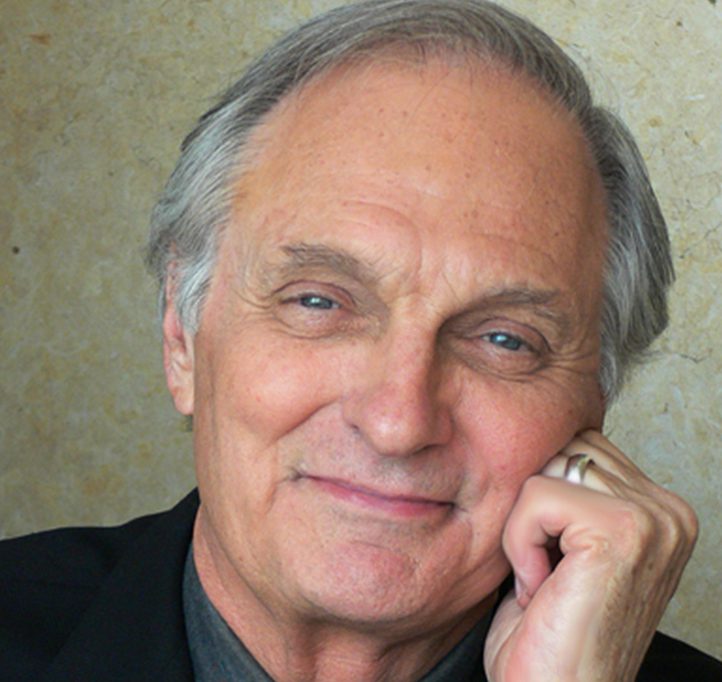
“Dear George — With admiration and gratitude.
I thought of your work with every sentence I wrote here.” — Alan Alda
(in reference to his book titled If I Understood You, Would I Have this Look on My Face?)
Alan Alda is a beloved actor, filmmaker, writer, and founder of the Alan Alda Center for Communicating Science. Alda’s quote is a personal inscription in the copy of his most recent book that he sent to Dr. Gopen. Alda devotes pages 134—136 of the book titled If I Understood You, Would I Have This Look on My Face? to an earnest appreciation of George and his Reader Expectation Approach.

“My very dear brother George is one of the most masterful teachers, erudite scholars and decent human beings I have ever encountered in the Academy… I salute my forever teacher and carry him inside me always!” — Dr. Cornel West
A former student of George’s at Harvard University, Dr. Cornel West is the current holder of the Dietrich Bonhoeffer Chair at Union Theological Seminary in New York City, NY. Dr. West has written 20 books including Race Matters and Democracy Matters. He offers instruction on a wide range of subjects encompassing philosophy, politics, literature, cultural theory, music, and the classics. He previously served as Professor of the Practice of Public Philosophy at Harvard University and holds the title of Professor Emeritus at Princeton University.
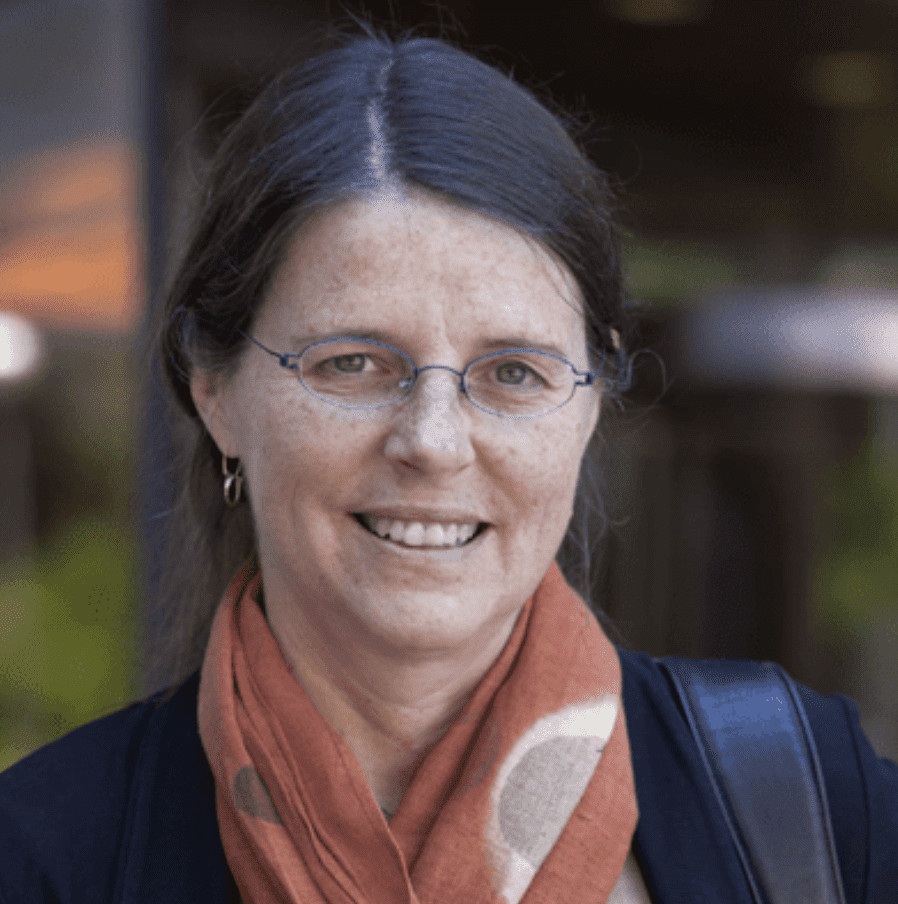
“George gave me my life, my career, my future. He gave me my dreams. I owe him everything.” — Victoria Seewaldt, MD
Victoria Seewaldt, MD is the Ruth Ziegler Chair in Population Sciences, and professor and chair of the Department of Population Sciences at the City of Hope Cancer Center. She has also served as an advisor to the National Institutes of Health. Dr. Seewaldt is an excellent example of REA’ s writing program success. Before REA training, Dr. Seewaldt had submitted 10 significant grant proposals and had been refused every time. Since her REA training, she has won every grant for which she has applied, including a remarkable number of R01 and U01 awards.
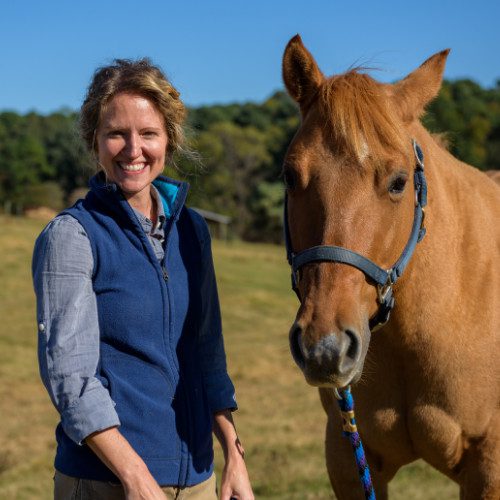
“There is not one single experience, workshop, webinar, seminar, or book… that has come close to making the impact on me… that encountering Gopen’s method and attending his seminars has made.” — Mary Katherine Sheets, DVM
Mary Katherine Sheats DVM, PhD, DACVIM is Associate Dean and Director of Professional Education and Admissions, Director of Distributive and Extramural Education at North Carolina State University College of Veterinary Medicine. Her research focus is on neutrophil mediated diseases that affect horses and humans, including asthma. Since training with George, Dr. Sheats has been awarded major research grants that include: Investigation of MARCKS Protein as a Novel Therapeutic Target to Decrease NETs in Equine Asthma.

“George is, beyond any question, the world’s greatest living teacher of writing, given his groundbreaking work in Reader Expectation Approach (REA).”— Abdulrahman Bindamnan, PhD
Abdulrahman Bindamnan, PhD is a Regional Scholar Fellow at University of Pennsylvania. In Bindamnan’s essay titled, “How I Learned to Write in English: A Personal Perspective: As a non-native speaker, here’s what I’ve learned about writing well” (Psychology Today, Feb. 2024), Bindamnan writes: “Seven years ago, I could neither read nor write in English; my native language is Arabic... reading Gopen’s prose was a transformative revelation for me. I have published almost 100 articles and essays, in both commercial publications and professional and academic journals.”
More on REA & non-native writers of English→
Watch: Clients Discuss Their REA Writing Program Success
How Training with George Gopen Helped Us Win More Funding
Explore all videos→
Reviews from Students
Your work, your passion, your presence really, really, really mattered to me.
I am so deeply grateful for you.”

Amigos de Guadalupe Center for Justice & Empowerment
“the best class I have taken at Duke”
“he does magic with the structure of texts”
“the most intellectually challenging course
I have ever taken”

Duke University
“my best English class ever”
“the best professor I have ever encountered”
Duke University
“a tremendous lecturer”
“a benchmark to which all other courses
should be compared”
“this course has revolutionized the way I read Shakespeare”
Duke University
Duke University
Reviews from Colleagues


Duke University

Duke University

Rockefeller Foundation; Duke University

Duke University

Duke University
More Testimonials
“I am grateful to [poet] Dennis O’Driscoll for providing me with George D. Gopen’s helpful prose translation of Robert Henryson’s Moral Fables at a moment when I might have been inclined to give up on the job.”
— Seamus Heaney, Nobel Laureate
Acknowledgements, Heaney’s translation of Robert Henryson’s Moral Fables, a 15th-century poem The Testament of Cresseid and Seven Fables
“It is accurate to call Dr. Gopen’s work revolutionary: and yet to all of his audiences it makes immediate sense. It is hard to use at first, because it requires that one works against deeply ingrained habits developed over a lifetime of writing. Those who do make the effort to apply what they have learned report astonishing success: Many people who had never succeeded in getting a single grant proposal funded report that now they are succeeding every time they apply.”
— Barbara Croft, FSNMMI, FACNM
Past President of the Society of Nuclear Medicine and Medical Imaging
“Your course, and the learnings from it that I have put into practice in every subsequent grant, have been transformative for my career so far. Since taking your class, I have had 3 out of 6 postdoctoral fellowship applications selected for funding. I just learned yesterday that my prestigious NIAID DP2 New Innovator Award received a perfect impact score – 10! While I’m confident that my science is worth funding, I truly believe that implementing your approaches to clearly communicate the worth and value of this science to my reviewers has been crucial to my success so far. Therefore, I want to reiterate – THANK YOU.”
— Nandan Gokhale, PhD
Assistant Professor, Cincinnati Children’s Hospital Medical Center
“Your article on the science of scientific writing was a total godsend to me and formed the basis of the curriculum I created for the University Writing Program at the University of Florida and during the early years of my teaching in what became the Clinical and Translational Science Institute. I doubt I would’ve dared teach writing to professors of neurosurgery and neonatologists if I had never come across your 1990 seminal article.”
— Yellowlees Douglas, PhD
Author, Writing for the Reader’s Brain (Cambridge University Press, 2025)
“The [Gopen] Seminar was one of the most valuable twelve hours I have ever spent.”
— Nell Beatty Cant, PhD
Associate Professor Emeritus of Neurobiology, Faculty Network Member of the Duke Institute for Brain Sciences
“Aside from my scientific mentors, I cannot think of anyone who has had a greater impact on my career than George Gopen. He has fundamentally changed how I write, enabling me to communicate complex concepts clearly. This book should be required instruction for anyone engaged in scientific writing.”
— Anthony Sung, MD
Professor, Hematologic Malignancies and Cellular Therapeutics, University of Kansas Medical Center
“Dr. Gopen’s course has transformed the way many faculty and trainees in the Duke School of Medicine approach their writing. His lectures place him among the very best teachers I have ever witnessed. Our attendees have commented that his approach makes them rethink the way they were taught to write, and wonder why they didn’t learn Dr. Gopen’s powerful and clear approach from the beginning.”
— Anne Brown, MD, MHD
Senior Associate Dean for Faculty Professionalism, Duke University Medical Center
“I provide writing feedback for graduate students regularly. Dr. Gopen’s concepts have allowed me to provide better feedback more quickly to students, as well as diagnose potential issues with problem passages. I’m not a writing expert, but his descriptions are clear enough that you don’t need to be an expert to start putting some concepts into practice.”
— Christopher I. Macintosh, PhD, RN
Assistant Professor, Director Nursing Informatics Specialty Track University of Utah College of Nursing
“I can say that your approach changed my life as a writer and editor and I’ll always remember it. Thank you.”
— Tom Clark
Former Director of Library Services, Shaw University
“I attended one of your workshops held at the University of Notre Dame in 2017 and it changed the way I think about writing.”
— Dr. Natasha MacBean
Associate Professor, Department of Geography & Environment and Department of Biology at Western University
“Your reader-expectation approach has significantly influenced how I think about writing, and I try to apply its principles to the best of my ability, both in my work reviewing student and faculty manuscripts and in classroom presentations on academic writing. Thank you for your work and for making such a valuable contribution to the teaching of writing.”
— Mark Burnette
Writing Specialist, Highlander Success Center, Radford University Carilion
“In the summer of 2023, I was fortunate enough to come across your work. Thereafter, during my final year at Oxford, applying your advice not only resulted in a drastic improvement in my tutorial essays but also culminated in a first-class degree… As further evidence of your approach’s remarkable insight, my six-thousand-word research project has been both awarded a prize within Oxford and also nominated for a UK-wide competition.”
— Andrei ‘Rick’ Longley
Director of Programme at OX1 Incubator. Research Assistant and Tutor at The University of Oxford
“Years later . . . looking back at my education . . . which class did I benefit from most? The answer is clearly your workshop. Not only did it help me write better papers and dissertations, it also changed the way I organize my thoughts and communicate in my daily life.”
— Mahmod Samman, PhD, PE
President, Houston Engineering Solutions
“I am a professional writer by default — and your training has changed my approach to writing, forever. This is fantastic stuff, and I thank you very much for sharing it. I am eager for you to return, and provide training for more of our students, postdocs and investigators.”
— Adam Bailis, PhD
Associate Dean of Research, Jefferson College of Health Professions, Thomas Jefferson University
“Scientific Writing From the Reader’s Perspective, taught by Professor George Gopen, is the single most highly rated faculty development program offered at Indiana University. One senior colleague with over 100 publications to his credit attended Dr. Gopen’s workshop and summed up his experience by stating ‘This was the best investment I ever made — the most cost effective time I have ever spent.’ That sentiment accurately reflects the yearly evaluations of this extraordinary learning experience.”
— Stephen P. Bogdewic, PhD, MA
Executive Vice Dean Emeritus at Indiana University
and Senior Associate Dean for Faculty Affairs and Leadership Development at University of North Carolina
“After attending Dr. Gopen’s writing workshops, I began to see how small changes in sentence structure yield large gains in clarity. His principles, grounded in decades of experience, expose the hidden flaws that obscure meaning for the reader. By prioritizing the reader, his approach has transformed my writing and elevated my effectiveness as an editor.”
— Devin C. Koestler, PhD
Associate Director of Research Operations, Department of Biostatistics & Data Science and Director, Quantitative ‘Omics Core, Kansas Institute of Precision Medicine
“I was able not only to understand why my documents were awkward . . . but also to gain the skills necessary for making future documents more understandable. In this regard, George Gopen’s consultancy is unique: He is perhaps the only person in the world who offers such a service. To have my writing style professionally analyzed and corrected, I traveled from Oslo, Norway. I would highly recommend consulting with George Gopen — his service will improve not only the document of interest but also your writing style.”
— Adam Robertson, PhD
Chief Scientific Officer, Hemispherian, Oslo, Norway
“Your visit has had a huge impact on people here at University of Dayton. The approach is so simple, yet it can be applied to the most complex content. In fact, the more complex the content, the more your approach can help! I think the reason your message resonates so strongly with people is that they are finally given the tool set they need to communicate well. It’s like a long-held mystery has been solved!”
— Mary S. Connolly, PhD
Chair, IRB Office for Research, University of Dayton
“George Gopen’s excitement about writing echoed through each page.”
— Richard S. E. Keefe, PhD
Author, On the Sweet Spot: Stalking the Effortless Present
“The empirical test, which I demand as a scientist, is that I would show it to people before and after and they were able to follow it much more clearly when I used the Gopen method of taking your sentence and putting things where the reader expects.”
— Cliff Cunningham, PhD
Full Professor, Department of Biology, Duke University
Transform your writing into results. Schedule a 20-minute call today.