
Two Bodies of Research Supporting The Reader Expectation Approach
The validity of George David Gopen‘s Reader Expectation Approach (REA) has been corroborated by two bodies of scientific evidence. You can navigate the sections and read the studies by clicking on their respective titles:
Section One: Reader Expectations Independently Identified is composed of studies on cognitive psychology and psycholinguistics that have independently identified structural reader expectations and the results of a writer’s meeting or violation of those expectations.
Section Two: The Academic Reach of George David Gopen’s Reader Expectation Approach is a collection of studies examining the results of applying the REA framework in a professional writing capacity across a wide array of disciplines.
“George — Your article on the science of scientific writing was a total godsend to me and formed the basis of the curriculum I created for the University Writing Program at the University of Florida and during the early years of my teaching in what became the Clinical and Translational Science Institute.”
— Yellowlees Douglas, PhD
Author, Writing for the Reader’s Brain (Cambridge University Press, 2025)


“The empirical test, which I demand as a scientist, is that I would show it to people before and after… they were able to follow it much more clearly when I used the Gopen method.”
— Cliff Cunningham, PhD — Professor, Department of Biology, Duke University
SECTION ONE:
Reader Expectations Independently Identified
While George David Gopen developed his Reader Expectation Approach to writing based entirely upon his own experiences and observations as an educator, writing consultant, and classical musician, his Main Discovery and the interrelated concepts are consistent with existing research in cognitive psychology and psycholinguistics. Studies examining reading and memory have validated George’s observations on reader expectations. This literature review of psychological research independently confirms that readers of English process and retain information more easily when writers place content in locations that match specific structural expectations for context, emphasis, and connection, as described in the Reader Expectation Approach framework. Each reader expectation articulated below by George is followed by a linked, independently peer-reviewed study that corroborates his observations.
The Reader Expectation Approach Main Discovery:
Readers of English have relatively fixed expectations of where in the structure
of the English sentence (or paragraph) to look for the arrival of certain kinds of substance.
Independent Corroborating Research
In “Predicting While Comprehending,” Martin J. Pickering and Chiara Gambi (2018) demonstrated that language comprehension operates through active prediction. Readers continuously anticipated upcoming linguistic content at multiple levels, including syntactic structure.
“After defining prediction, we show that it occurs at all linguistic levels from semantics to form.”
— Martin J. Pickering & Chiara Gambi
“Predicting while comprehending language: A theory and review.”

The Reader Expectation Approach
Interrelated Concepts:
I. Depleting “reader energy” impedes comprehension.
“At the beginning of each reading experience, readers summon the necessary reader energy which will be required to bring that experience to a closure. When readers find all the material they expect to find in all the places they expect to find it, they use the minimal amount of reader energy. If these structural expectations are continually violated, readers are forced to divert energy from understanding the content of a passage to unraveling its structure.” — George David Gopen
Independent Corroborating Research
Pickering and Gambi also illustrated that readers processed information more efficiently when it arrived in the location in which it was expected to arrive. When information the readers expected was not located in the expected location, additional cognitive resources were required to reanalyze the text; this in turn reduced comprehension by increasing the difficulty of processing.
II. Context controls meaning.
“Readers perceive from left to right and through time as they read the English language. Anything that appears whether a word, a phrase, a clause, or anything larger, appears in the context of what has preceded it. REA directs the writer to establish context, sentence by sentence.” — George David Gopen
Independent Corroborating Research
In “Comprehension and the Given-New Contract,” Herbert H. Clark and Susan E Haviland (1977) discovered that readers of English expect sentences to open with familiar, contextualizing information and to close with new, emphasized information. They termed this “the given-new contract.”
III. Good writing is always characterized by a reader’s sense of moving forward.
“Moving forward in a sentence is directly connected to a reader’s expectation of where they might be going from here. Anytime a reader has to turn back, confusion can ensue and reader energy can be wasted.” — George David Gopen
Independent Corroborating Research
Clark and Haviland also showed that when sentences are structured so that Given information comes first and New information follows, readers process them more easily and remember them better. Reversing the order of the information presented increased processing difficulty and decreased retention, even though the factual content was identical.
IV. Well-controlled sentence connectivity improves the flow of thought.
“For a reader to follow the progression of a writer’s thought, each sentence must announce as soon as possible how it connects backward. When readers can make these connections without effort, they progress through a paragraph with a minimal expenditure of reader energy.”— George David Gopen
Independent Corroborating Research
In “The given-new strategy of comprehension and some natural expository paragraphs,” William J. Vande Kopple (1982) demonstrated that readers integrate new information directly into the memory node holding the given information from the preceding sentence. When each sentence opens with information that connects backward to what preceded it, readers build connected understanding across a paragraph without effort. When that backward connection is absent or unclear, readers must expend additional cognitive resources searching for the link — interrupting the forward progression of their comprehension.
V. Readers emphasize words that appear in a sentence’s “stress positions.”
“The human need for closure extends to the act of reading — operating at the level of every individual sentence. Readers naturally emphasize the material that arrives at the end of a sentence. We refer to that location as a ‘stress position.’” — George David Gopen
Independent Corroborating Research
In his 1885 book, Memory, Hermann Ebbinghaus first identified what he termed the serial position effect. He found that memory recall accuracy varies based on the item’s linear position in a series.
In “The serial position effect of free recall,” B. B. Murdock (1962) plotted the serial position effect curve — detailing the primacy effect and the recency effect located at either end of the curve’s characteristic U-shape (image below). The primacy effect is the phenomenon of remembering the first item in a series better than items in the middle. The recency effect is the phenomenon of remembering the last item in a series better than even the first.
In “Two storage mechanisms in free recall,” Glanzer & Cunitz (1966) explained that the recency effect exists because the last items in a sequence remain active in short-term memory at the moment of recall.
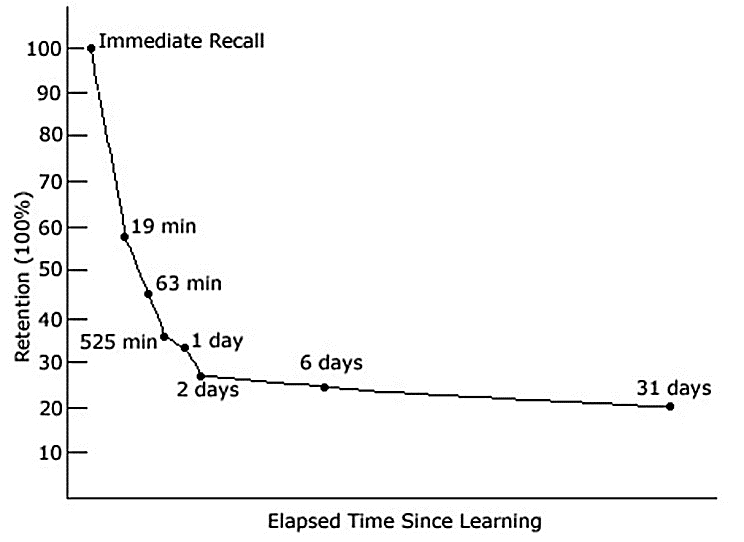
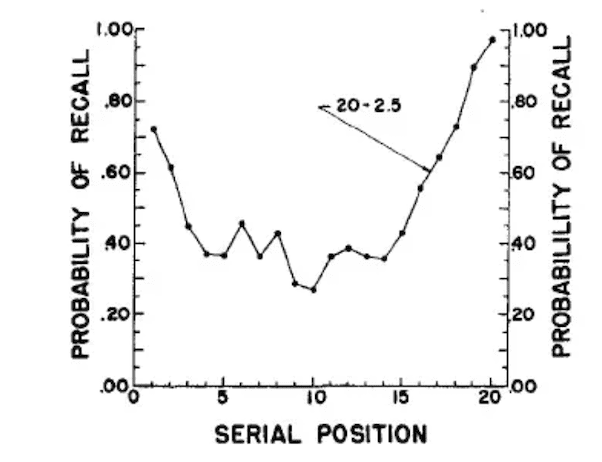

Hermann Ebbinghaus
The Forgetting Curve
B. B. Murdock
The Serial Position Effect Curve
Pickering & Gambi
The Recency Effect

“Dr. Gopen’s reader expectation approach has reshaped scientific writing, offering insights into crafting persuasive and reader-centered content.”
— Virginia Byers Kraus, MD, PhD
Mary Bernheim Distinguished Professor of Medicine, Duke University School of Medicine
SECTION TWO:
The Academic Reach of
George David Gopen’s Reader Expectation Approach
Since the release of George’s 1990 American Scientist article “The Science of Scientific Writing,” co-authored with Judith A. Swan, a substantial body of peer-reviewed studies has emerged evaluating and applying his practical framework for harnessing reader expectations. Researchers in medicine, science, law, education, engineering, computer programming, and mathematics have corroborated the Reader Expectation Approach across multiple fields. Researchers experiencing the benefits of clearer communication through implementation of George’s Reader Expectation Approach framework have used it as a basis for developing programs, curricula, materials, and even software. The scholarship that follows emerged when researchers encountered George’s framework and brought it into their own academic and professional practices. This section presents peer-reviewed studies spanning multiple disciplines that demonstrate the influence and efficacy of the framework, and on some occasions, proposes its adoption. George has also contributed as a co-author on studies which appear in a separate section at the end of this literature review.
Reader Expectation Approach in Medicine & Life Sciences
A professor of medicine at Duke drew explicit parallels between REA’s structural principles and compositional strategies used in landscape art, applying Gopen’s framework to scientific writing in a peer-reviewed clinical journal. Her paper demonstrates REA’s reach into visual and compositional thinking about how information is structured for an audience.
A professor of medicine and director of the Centre for Education Research & Innovation at Western University applied REA principles directly to scholarly prose, arguing that reader expectation theory is central to achieving clarity and flow in academic medical writing. Lingard treats REA not as background theory but as actionable guidance for researchers drafting manuscripts.
Researchers publishing in one of ecology’s leading journals cited REA principles in their guidance on how to write about ecological models for decision-makers — positioning clear structural communication as essential to translating scientific findings into policy.
Nurse educators developed a framework for teaching scientific writing in nursing that draws directly on REA, arguing that reader-expectation principles provide nursing students with the structural tools needed to produce clear, publishable scholarly work.
Among the earliest independent citations of REA in engineering education, this paper identified reader-expectation principles as a tool for diagnosing and correcting structural problems in student writing in chemical engineering.
Reader Expectation Approach in Law & Legislative Drafting
Abstract: The article focuses on the legislation drafting and reader expectation theory. It mentions that author George Gopen has published various works with legislative drafting subject based on reader expectation theory. It state that Gopen has used the reader expectation theory in his revision of provisions in the Uniform Commercial Code (UCC). It adds that the article of Gopen is a valuable contribution in the progress of legislative drafting.
A senior government lawyer writing in Oxford University Press’s peer-reviewed law journal identified Gopen’s reader expectation theory as an approach that ‘sits comfortably within the plain language school’ of legislative drafting, placing REA within the tradition of accessible legal language at the highest levels of legal practice.
A law professor applied reader expectation theory to the specific challenge of bar exam writing, arguing that understanding what readers expect from legal prose — and where they expect to find it — is essential to writing answers that earn full credit. Available above from BePress Legal Repository.
Reader Expectation Approach in Computer Programming
Computer scientists at the IEEE’s annual program comprehension conference proposed applying REA directly to source code, arguing that the same structural expectations readers bring to prose apply to how programmers read and comprehend code. This is REA’s furthest disciplinary reach — from literary rhetoric into software engineering.
Reader Expectation Approach in Natural Language Processing
Tomi Kinnunen et al. “SWAN – Scientific Writing AssistaNt: A Tool for Helping Scholars to Write Reader-Friendly Manuscripts” Proceedings of the Demonstrations at the 13th Conference of the European Chapter of the Association for Computational Linguistics, 2012
Computational linguists built an automated scientific writing assistant grounded in REA principles, implementing Gopen’s structural concepts as computable rules for evaluating manuscript clarity. That REA proved tractable enough to encode in software is itself a testament to the precision of its underlying framework.
Reader Expectation Approach in Scholarly Commentary
Beyond application as a tool, a number of scholars have written about Gopen’s Reader expectation Approach itself — situating it within broader conversations about writing pedagogy, scientific communication, and the relationship between rhetoric and research. Their assessments, published independently and across disciplines, speak to the framework’s standing in the academic community.
In A Multidisciplinary Exploration into Flow in Writing (Routledge, 2024), Deborah F. Rossen-Knill credits Gopen and Swan’s 1990 American Scientist article with having first widely popularized the end-focus principle in writing instruction. Alongside foundational figures in functional linguistics and rhetoric, Gopen and Swan are cited as establishing the scholarly framework for understanding how sentence-level arrangement affects a reader’s experience of flow. The book also highlights The Sense of Structure (Gopen, 2004) as a seminal work on given-new and end-focus, noting that an instructor who applied rhetorical grammar approaches to flow used it both in his own writing and with his students.
A leading consumer researcher and past president of the Association for Consumer Research called Gopen and Swan’s ‘The Science of Scientific Writing’ one of the best discussions of the reader’s expectations in the context of academic prose” — an assessment published in a peer-reviewed design research journal, entirely independent of George Gopen.
In a book-length treatment of scientific writing published by World Scientific, Lebrun engages REA as a substantive framework — not merely a citation — making it one of the few independent book-length treatments to take Gopen’s structural principles seriously as a theoretical contribution to scientific communication.
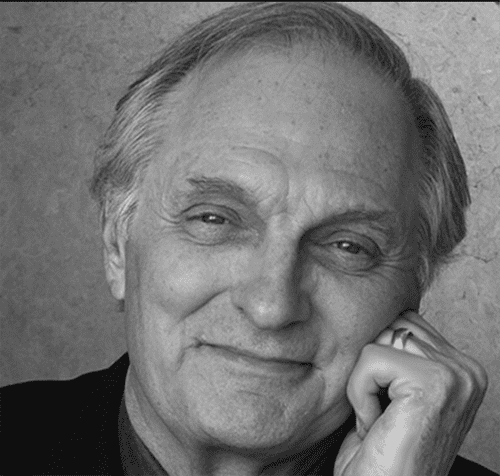
“Dear George — With admiration and gratitude. I thought of your work with every sentence I wrote here.”
— Alan Alda (referring to his book If I Understood You Would I have This Look On My Face?)
The actor, science communicator, and founder of the Alan Alda Center for Communicating Science engaged REA directly in his book on science communication — the only mainstream crossover treatment of Gopen’s work, bringing reader expectation principles to a general audience through one of the most prominent science communication voices in the United States.
A Routledge book chapter on second-language academic writing engages REA in the context of helping non-native English speakers understand why English prose is structured the way it is — positioning Gopen’s framework as explanatory at a fundamental linguistic level, not merely prescriptive.
A scientific writing educator positioned REA within the broader debate about what scientific writing requires — engaging Gopen’s framework as a serious contribution to how the field thinks about the relationship between structure and comprehension.
Academic Reach of the Reader Expectation Approach
A study of undergraduate thesis writing at Duke cites Gopen & Swan within a peer-review–based writing intervention. The paper is freely available through PubMed Central.
Chemistry education researchers at Michigan identified “the lack of attention given to reader-expectation principles in most contemporary scientific writing” as a barrier to clear scientific communication — citing Gopen’s foundational research on the subject.
Sarah C. Petersen, Jennifer M. McMahon, Hewlet G. McFarlane, Christopher M. Gillen, Haruhiko Itagaki — Kenyon College “Mini-Review – Teaching Writing in the Undergraduate Neuroscience Curriculum: Its Importance and Best Practices” Neuroscience Letters, Volume 737, 2020
A 2020 study published in Neuroscience Letters by researchers from Kenyon College identified REA as a “fundamental transferable principle of excellent writing,” recommending Gopen’s “Science of Scientific Writing” as part of a scaffolding approach to teaching scientific writing at the undergraduate level in neuroscience.
Institutional Adoption of the Reader Expectation Approach
Gopen’s reader expectation framework has been independently adopted as a recommended resource by writing programs and research support offices at institutions including Purdue University (Purdue Writing Lab/OWL), the Naval Postgraduate School Graduate Writing Center, Albert Einstein College of Medicine, and the University of Alaska Fairbanks Office of Grants & Contracts Administration.
Reader Expectation Studies Co-authored by George David Gopen
Six Indiana University School of Medicine faculty researchers, together with George David Gopen as a contributing author, published findings from a faculty writing development program built around REA. One hundred-fifteen of 230 faculty participants were surveyed and 87% reported increased confidence in communicating concepts in writing, 72% believed their manuscripts and grants would be more competitive, and approximately one-third reported an increase in grant proposal submissions following participation.
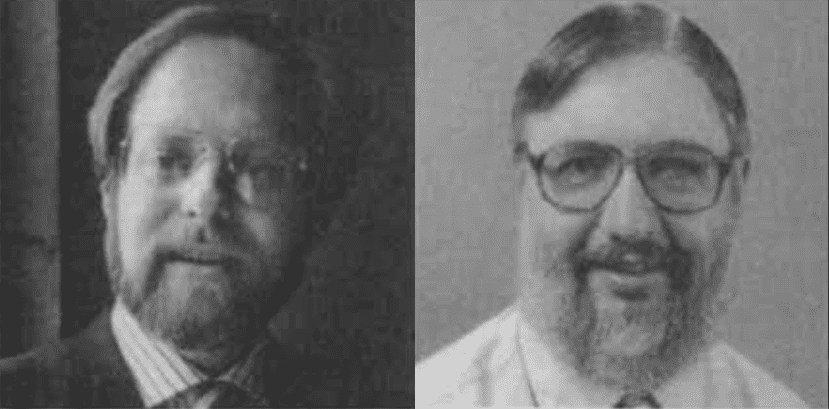
“Thought and expression of thought are so inextricably intertwined for students that improving one will improve the other.”
— George D. Gopen & David A. Smith “What’s an Assignment Like You Doing in a Course Like This?: Writing to Learn Mathematics” The College Mathematics Journal, Vol. 21, No. 1, 1990
In this collaboration between a rhetorician and a mathematician — both at Duke — Gopen and Smith make the case that writing assignments are among the most powerful diagnostic tools available to mathematics instructors. Their central argument: a student who cannot articulate mathematical reasoning in prose has not fully understood it. Procedural fluency — the ability to execute an algorithm correctly — can mask genuine conceptual gaps that only surface when a student is asked to explain what they did and why. Writing exposes those gaps in a way that problem sets do not.
The article appeared first as a chapter in Writing to Learn Mathematics and Science (Teachers College Press, 1989) before its expanded publication in The College Mathematics Journal. It remains a foundational text in the writing-across-the-curriculum movement and a early marker of the intellectual framework that was becoming the Reader Expectation Approach: that clear writing and clear thinking are not merely correlated —but the same activity viewed from different angles.
George D. Gopen & Judith A. Swan — “The Science of Scientific Writing.” American Scientist, 78, 550-558, 1990.
ABSTRACT: “Science is often hard to read. Most people assume that its difficulties are born out of necessity, out of the extreme complexity of scientific concepts, data and analysis. We argue here that complexity of thought need not lead to impenetrability of expression; we demonstrate a number of rhetorical principles that can produce clarity in communication without oversimplifying scientific issues. The results are substantive, not merely cosmetic: Improving the quality of writing actually improves the quality of thought.”
From Research to Results:
The Impact of Writing for Reader Expectations
The research collected above represents two bodies of scientific literature that have independently confirmed the concepts George David Gopen developed through his own close analysis of how readers respond to prose. For over four decades, tens of thousands of professionals have experienced the results of REA firsthand. Researchers who had never succeeded in securing grant funding before adopting REA found themselves succeeding with every grant application thereafter. To see what that looks like in practice, explore the real-world outcomes of REA training at six leading research institutions.