Unlock Writing Success with Reader Expectation Approach Training
Most professional writing workshops teach you what to write. Dr. George David Gopen teaches you how readers read. Understanding structural reader expectations transforms both the clarity our writing and the results it produces. All programs are available in formats customized to your organization’s goals. Whether you represent a research institution, a law firm or a business, you can choose from a combination of professional writing seminars, workshops, and e-learning programs.
Training can take place from one day to several, increasing participants skill level with each learning block. Workshops offer the most intensive instruction. Individual consultations are also available for specific high-stakes documents. You’re invited to explore training program descriptions listed below. To discuss which training options can best support your talented team, please request a complimentary 20-minute discovery call.
Training Program Descriptions
Foundational Seminar

Applying the Reader Expectation Approach to Professional Writing Challenges.
Prerequisite: None
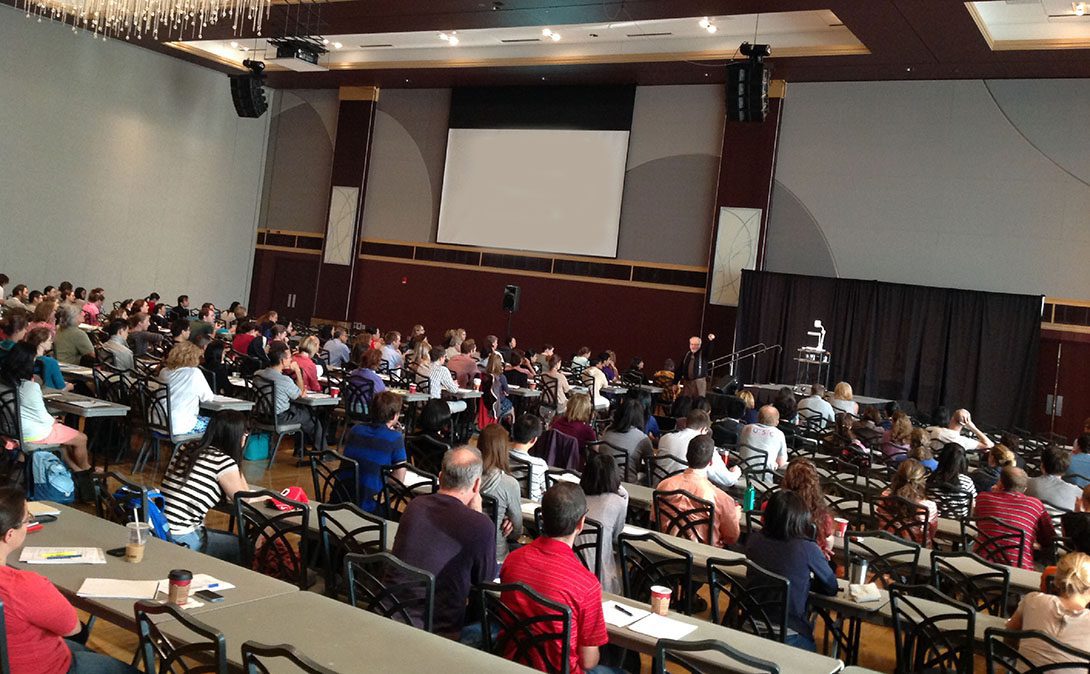
Participants: Audience size can range up to about 600 participants; the ideal size is 12–24.
Structure: An instructor-led training session that includes guided exercises. This lecture-based introductory session lays the foundation for intensive study in the REA principles.
Focus: Lecture presentation focused on reader expectations concepts applied to sentence structure with practice exercises that include analysis of professional writings encompassing a breadth of disciplines.
Learning Outcomes: The information presented will provide immediate possibilities for dramatic improvement in the clarity of participants’ writing. Attendance prepares learners for beginning participation in the three-person intensive workshop.
Time: 8 hours
Advanced Seminar Series
Advanced Applications of the Reader Expectation Approach to Professional Writing Challenges
Prerequisite: Available for those who have attended the Foundational Seminar.
Participants: Audience size can range up to about 600 participants; the ideal size is 12–24.
Structure: An instructor-led training in two sessions that includes guided exercises. Day one lays the foundation for intensive study in the REA framework, and day two develops skill and confidence in advanced professional practice.
Focus: Lecture presentations focused on advanced reader expectations concepts applied to the structure of sentences and paragraphs. Practice exercises that include analysis of professional writings encompassing a breadth of disciplines.
Learning Outcomes: The information presented will provide immediate possibilities for dramatic improvement in the clarity, force, and eloquence of participants’ writing. Attendance prepares learners for advanced participation in the three-person intensive workshop.
Time: 16 hours
Intermediate Seminar Series
Intermediate Applications of the Reader Expectation Approach to Professional Writing Challenges.
Prerequisite: None
Participants: Audience size can range up to about 600 participants; the ideal size is 12–24.
Structure: One-and-a-half-days of instructor-led training that include guided exercises. This lecture-based training lays the develops participant skills in REA practice to the intermediate level.
Focus: Lecture presentation focused on complex reader expectations concepts and applying patterns over multiple sentences. Practice exercises that include analysis of professional writings encompassing a breadth of disciplines.
Learning Outcomes: The information presented will provide immediate possibilities for dramatic improvement in the clarity and force of participants’ writing. Attendance prepares learners for intermediate participation in the three-person intensive workshop.
Time: 12 hours
Three-person Workshop Intensives

Mastering The Reader Expectation Approach with Small Group Writing Analysis
Prerequisite: Available for those who have attended the Foundational Seminar or viewed the first seven episodes of the 12‑episode E‑Learning Series.
Participants: Exactly three (3) per session
Structure: Instructor-led small-group workshop sessions offer immersion in advanced REA practice with analyses of each person’s stylistic habits.
Focus: Workshops allow individualized attention to a small group (three participants), with discovery of shared reader-expectation problems, and discovery of each participants other habitual issues.
Learning Outcomes: Individualized training builds upon the principles learned in the seminar or eLearning series to help writers revise their styles permanently and better control readers’ interpretive processes.
Time: 2.5 hours per session; up to three sessions per day are possible (maximum nine participants per day).
E-Learning

E-Learning: George Gopen’s Reader Expectation Approach (12-Part Series)
Participants: Unlimited, but one at a time.
Structure: Self-paced online introductory training program which lays the foundation for intensive study in the REA principles.
Focus: Lecture presentation focused on reader expectations and sentence/paragraph structure with practice exercises that include multidisciplinary writings.
Learning Outcomes:The information presented will provide immediate possibilities for dramatic improvement in the clarity of participants’ writing. Episodes 1—7 serve as preparation for participation in the intensive workshop.
Time: 15.5 hours (the first 7 episodes qualify as prerequisite credit.)
Document Consultations

Applying The Reader Expectation Approach to the Production of a Single Important Document
Participants: One (1)
Structure: Focused, single-participant tutorials.
Focus: Consultations are available for individuals with high‑stakes projects such as major grant proposals, tenure dossiers, etc.
Learning Outcomes: The outcome is a refined version of this important document with maximized possibilities for success.
Time: Negotiable

Your writing can win more decisions.
Learn how readers actually go about reading and interpreting your text.